
Synthetic Aperture Radar (SAR) generates high-resolution images of the ground from aerial platforms, regardless of smoke, dust, clouds, or total darkness. By processing radar returns collected over the aircraft’s flight path, the system creates a "synthetic" aperture much larger than the physical antenna. This allows the radar to efficiently map vast geographic areas to detect man-made targets or focus on specific points of interest with exquisite detail.
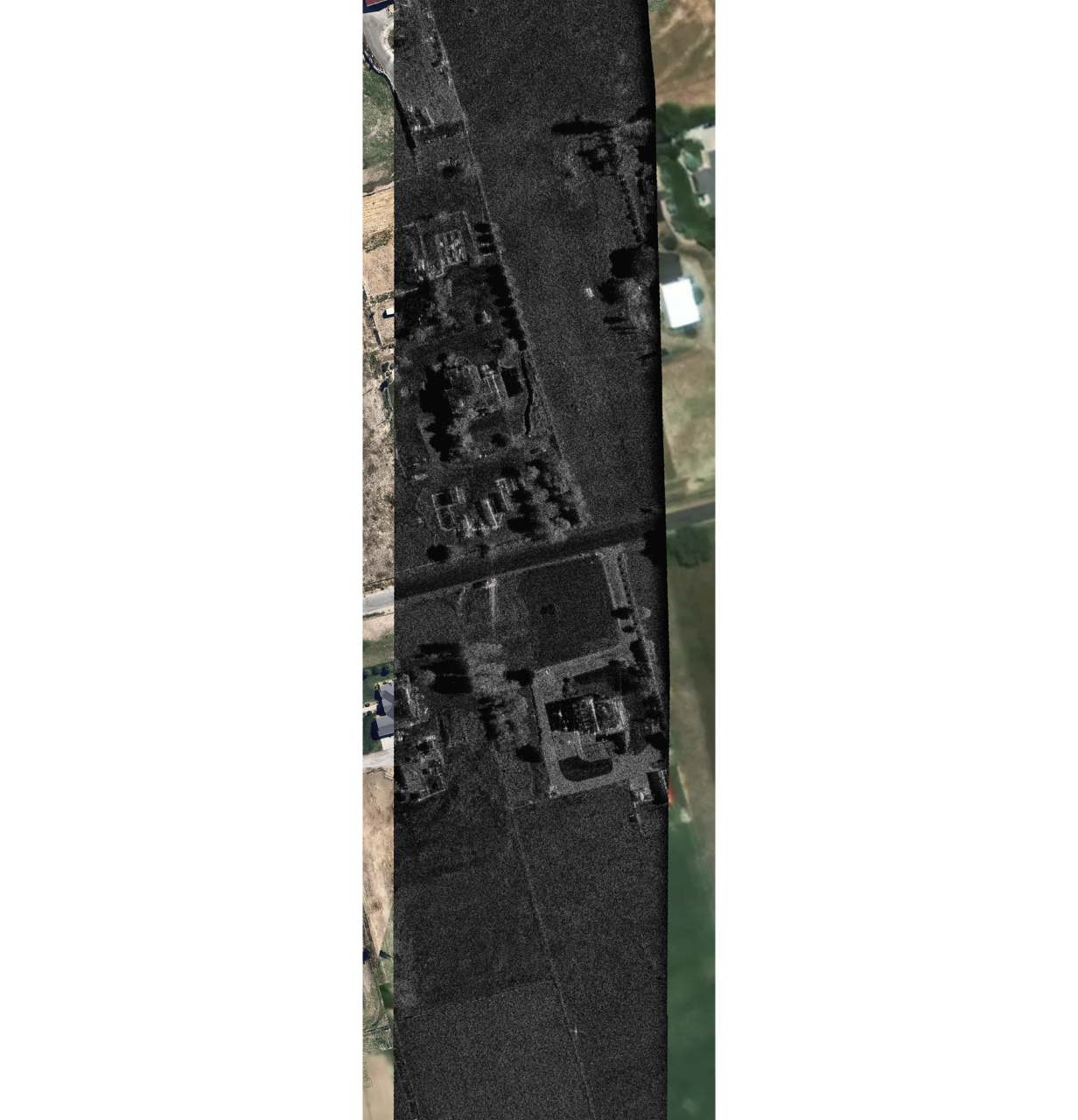

Synthetic Aperture Radar (SAR) generates high-resolution images of the ground from aerial platforms, regardless of smoke, dust, clouds, or total darkness. By processing radar returns collected over the aircraft’s flight path, the system creates a "synthetic" aperture much larger than the physical antenna. This allows the radar to efficiently map vast geographic areas to detect man-made targets or focus on specific points of interest with exquisite detail.
Spotlight mode dwells on a specific point of interest for an extended duration. By collecting imagery from a variety of aspect angles as the aircraft moves, the radar can "illuminate" the target from different perspectives. This multi-angle approach is essential for catching radar glint from metallic objects and revealing details in areas that would otherwise be hidden in radar shadows.
In Stripmap mode, the radar beam sweeps along the surface to efficiently image large areas at either coarse or fine resolution. IMSAR’s advanced processing enables high-fidelity imaging not only on parallel paths but also across ad hoc or complex flight profiles, providing maximum operational flexibility for the pilot or UAS operator.
SMV provides a continuous live stream of radar imagery, serving as a radar analog to Full-Motion Video (FMV). This specialized capability allows for persistent, real-time visualization of a target area and is available as a custom integration for specific mission requirements.
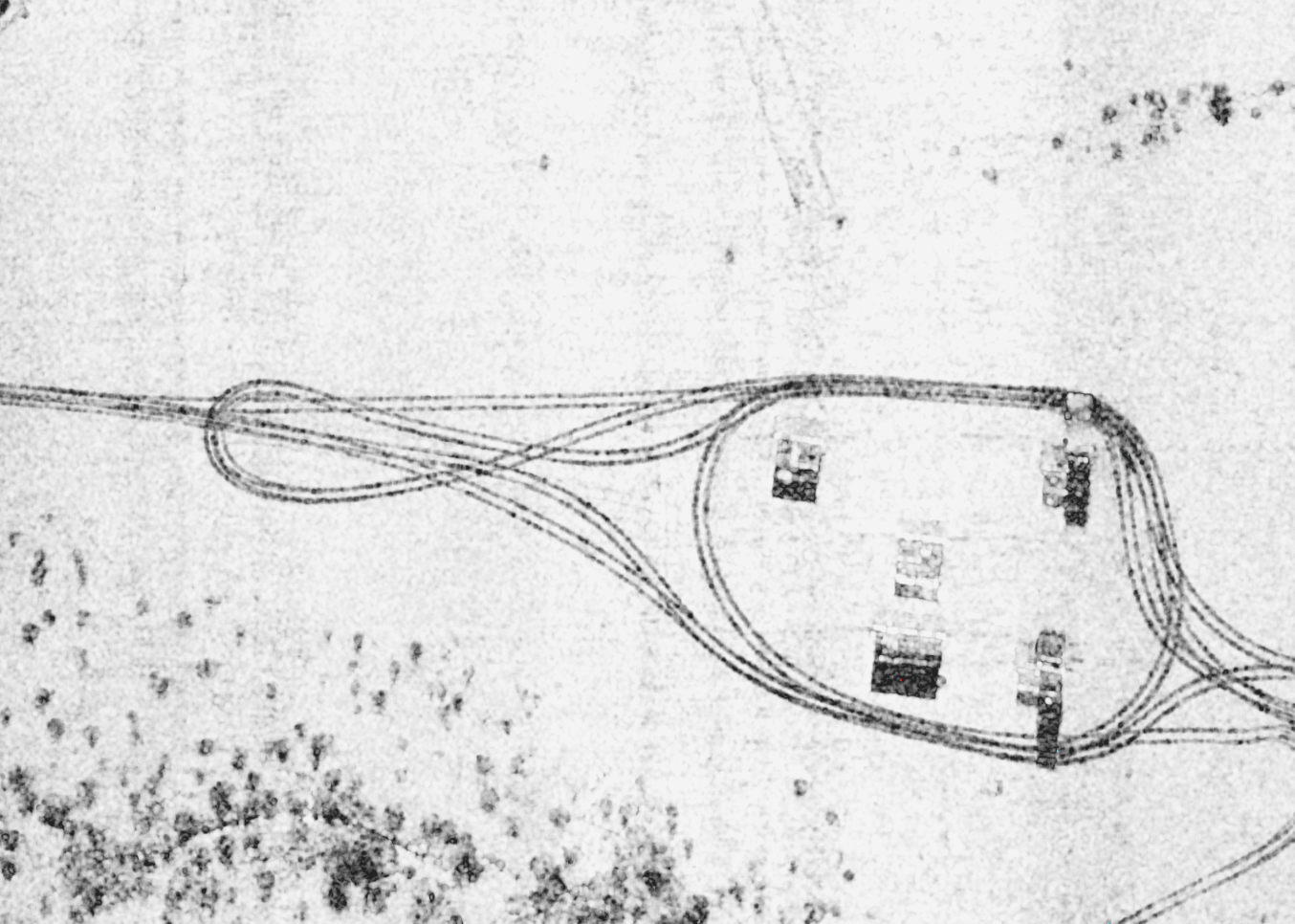
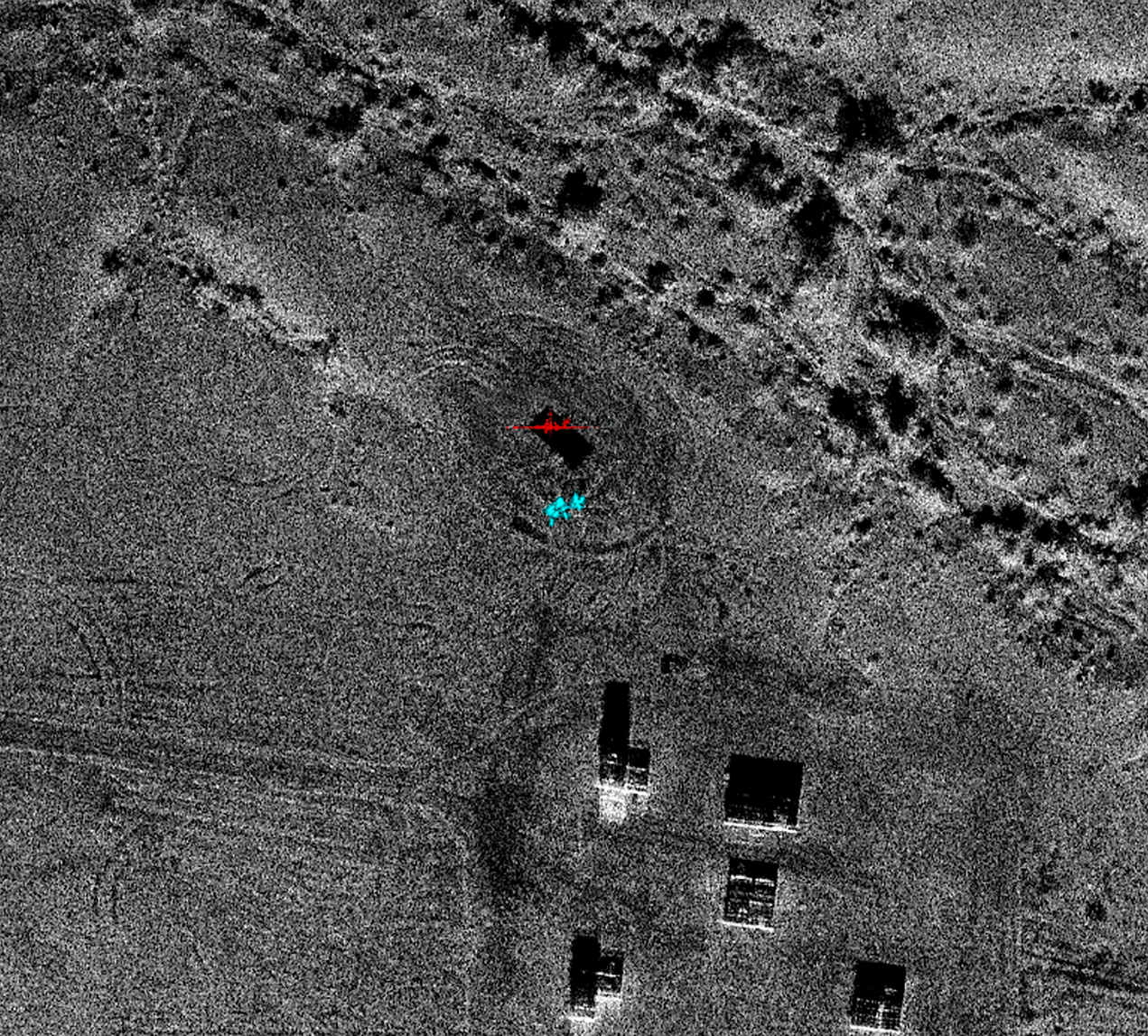
Detecting the Invisible Change Detection algorithms compare two SAR images of the same location taken at different times to automatically highlight what has changed. This allows analysts to ignore the static background and focus purely on new activity.
CCD compares the phase of the radar waves to detect minute, sub-wavelength disturbances. It reveals subtle changes often invisible to the naked eye, such as tire tracks across a field or gravel road, disturbed earth, or footprints in the sand. This mode is essential for establishing "patterns of life" over time. For increased context, MCD detections are typically overlaid on the CCD image.
MCD highlights significant physical alterations, such as a vehicle arriving or departing, a new structure being built, or a shipping container being moved. It provides a clear "Before and After" assessment for monitoring logistics and infrastructure.
Tracking the Dynamic While SAR primarily images the stationary world, MTI detects and tracks what is moving. IMSAR radars use advanced clutter cancellation to separate moving targets from the background environment, allowing operators to maintain the chain of custody on dynamic threats.
GMTI detects and tracks vehicles moving across the terrain. It filters out stationary objects to provide precise geolocation and velocity data for trucks, cars, and convoys. This data can be used to cross-cue optical cameras, automatically slewing them to the target.
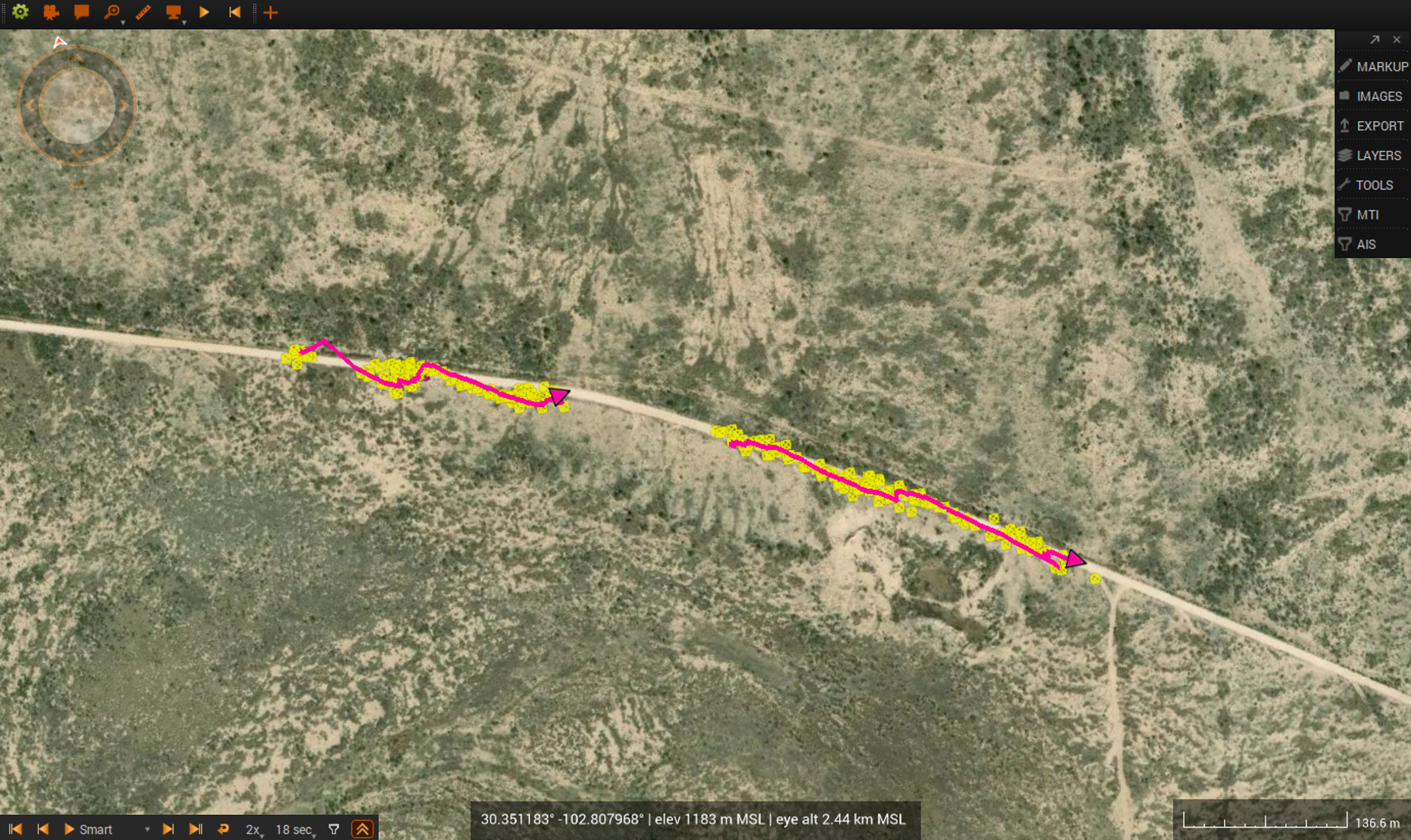
A highly sensitive mode designed to detect the slower, more subtle movement of personnel (dismounts). This mode is critical for border security and counter-insurgency operations.
%203.png)
Designed for the complex clutter of the ocean surface, MMTI detects and tracks vessels ranging from large ships to small, low-profile watercraft.
ISAR (Inverse Synthetic Aperture Radar): Often paired with MMTI, ISAR uses the motion of the target itself to generate a high-resolution image of the vessel, allowing operators to classify the ship type even in total darkness.
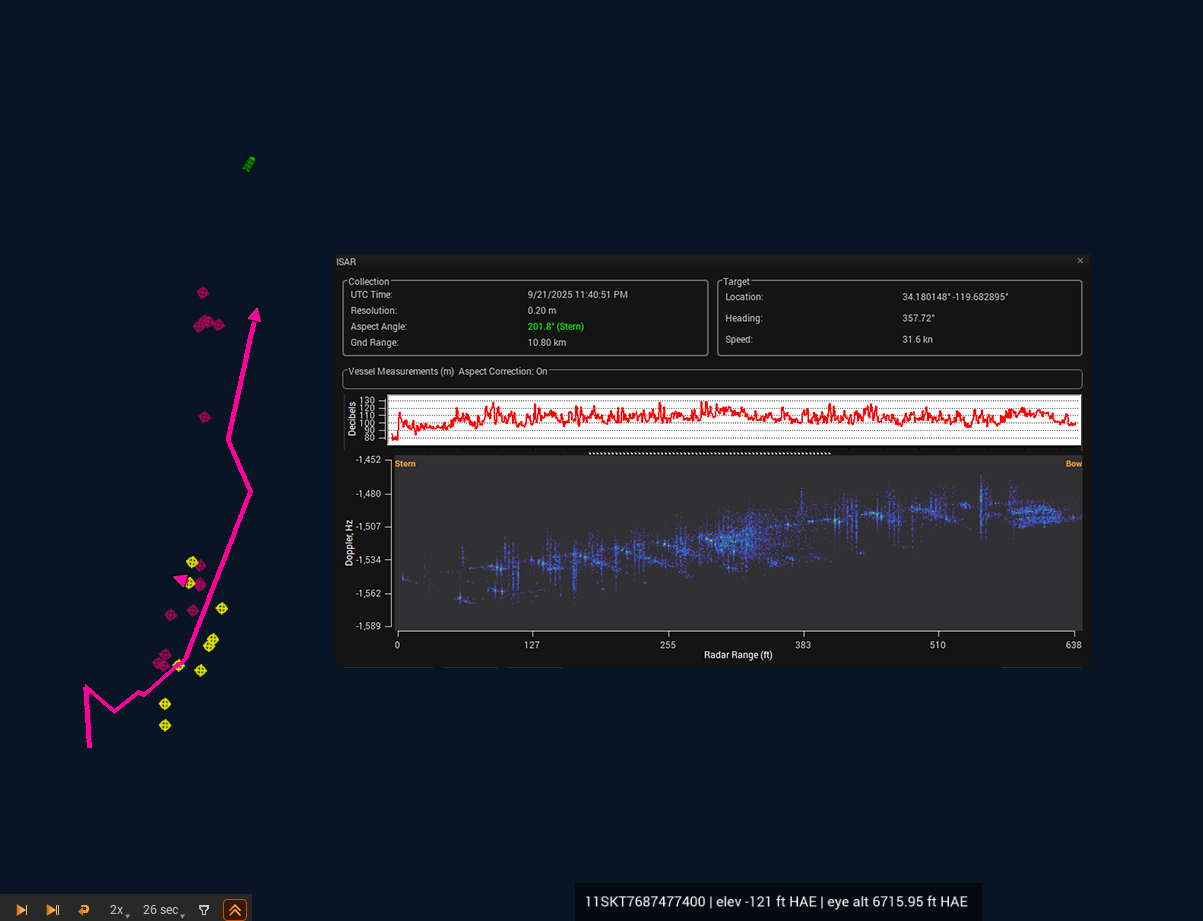
AMTI provides air-to-air situational awareness by detecting other aircraft. Initial capability focuses on the detection of fast-moving flyers, with expanded support for small and slow UAS detection in development. This emerging capability is hardware-dependent and available on select system configurations.
.png)
Tracking the Dynamic While SAR primarily images the stationary world, MTI detects and tracks what is moving. IMSAR radars use advanced clutter cancellation to separate moving targets from the background environment, allowing operators to maintain the chain of custody on dynamic threats.

.png)